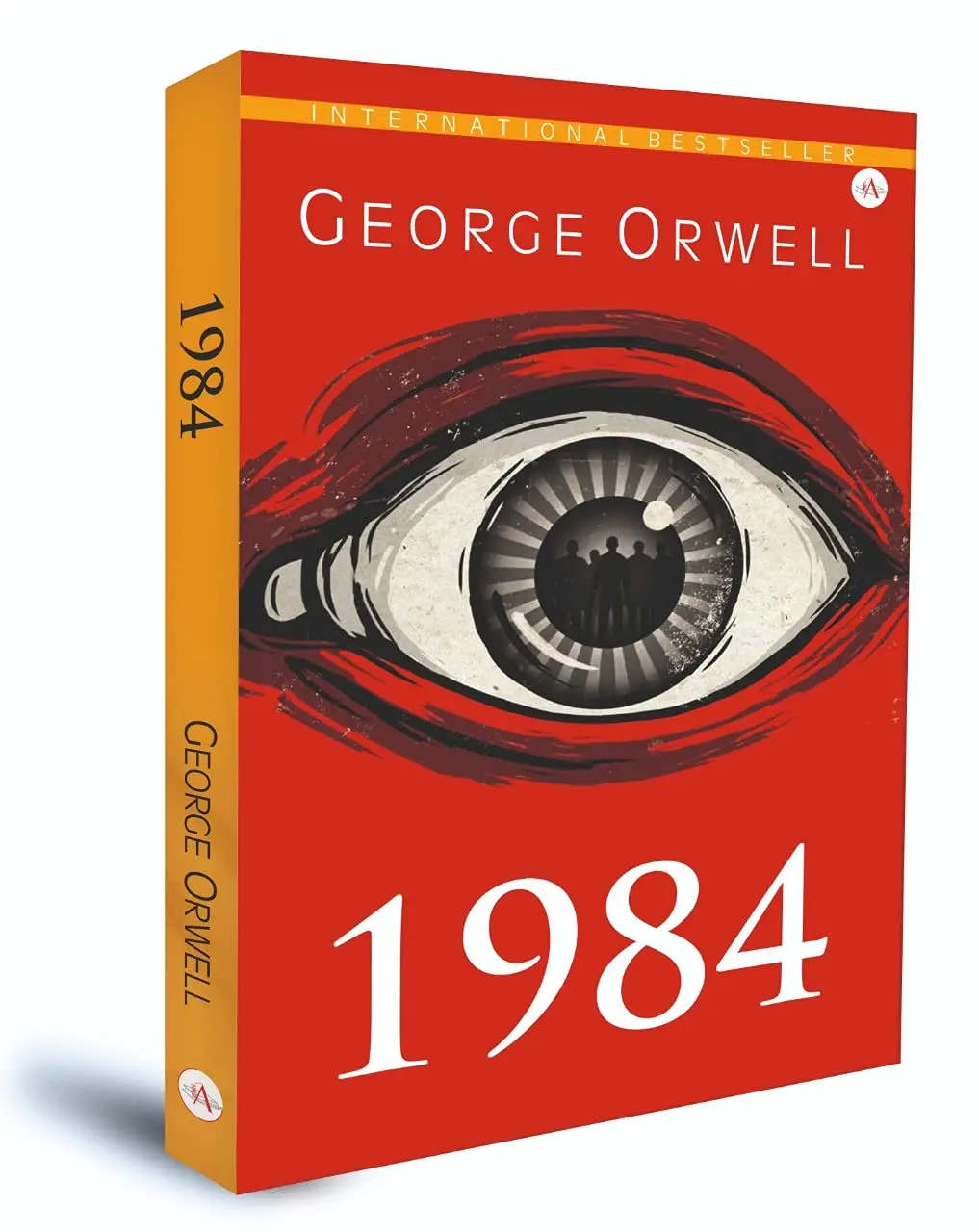
Before we get to paper quality and font size, let's be clear: you need to read this book. It's not an exaggeration to say that 1984 has become a manual for understanding our modern world. With debates raging about privacy, "fake news," and government surveillance, Orwell's dystopian vision feels less like fiction and more like a sobering reflection of our times.
I often find myself referring to its concepts, Big Brother, doublethink, Newspeak, when trying to explain current events to friends and family. Owning a copy isn't just about reading; it's about arming yourself with a critical lens to view the world. And at just ₹99 on Amazon India, there's no excuse not to have this essential book on your shelf.
The Quick Verdict
Let's cut to the chase. George Orwell's 1984 isn't just a book you should read, it's a book you must read. Whether you're a student trying to understand political theory, a parent wanting to discuss freedom and democracy with your children, or simply someone who wants to make sense of our increasingly digital world, this dystopian masterpiece offers insights that feel more relevant today than when it was written in 1948.
The Specs That Actually Matter: A Buyer's Checklist
When comparing editions, forget flashy marketing. Here's what you should really be looking for, based on my countless hours spent in bookstores and online:
Binding and Build Quality: This is a book you'll likely revisit. A flimsy binding that cracks after one read is a tragedy. Look for terms like "trade paperback" which often indicates better paper quality and a more durable binding than mass-market paperbacks.
Translation and Edition: For a book where language itself is a theme (Newspeak, anyone?), you want the pure, unaltered text. Luckily, most major publications in India use the original Orwell text. The key is to avoid abridged versions, always check for the word "unabridged."
Page Quality and Font: There's nothing worse than thin, see-through paper or a microscopic font that gives you a headache. Higher GSM (grams per square meter) paper means less bleed-through, crucial if you're a highlighter or margin-scribbler.
Introductions and Supplementary Material: Many editions include a foreword by a famous author or critic. These can provide fantastic context and enhance your understanding. For a first-time reader, an introduction might be best saved for after you've finished the novel to avoid spoilers.
Comparing the Top Contenders: Edition Breakdown
Based on thousands of reviews and real reader experiences, here's how popular editions stack up:
| Edition | Price Range | Key Strengths | Best For |
|---|---|---|---|
| Fingerprint! Classics Paperback | ₹150 - ₹200 | Excellent value. Good paper quality, clear printing. Consistently high ratings. | First-time readers, students on a budget, solid reading copy. |
| Maple Press Paperback | ₹100 - ₹150 | The budget king. Most affordable decent copy. Does the job without frills. | Price-conscious buyers who just want to read the story. |
| Rupa Publications Hardcover | ₹400 - ₹500 | Durability. Beautiful, sturdy hardcover that lasts for years. | Collectors, gift-givers, and frequent re-readers. |
| Penguin Modern Classics | ₹300 - ₹400 | Academic standard. Often includes critical introductions and analysis. | Students and readers who want scholarly context. |
See that? The Fingerprint! Classics edition sits in that sweet spot where quality meets affordability. It's what I recommend to 95% of people, well-made, reasonably priced, and perfectly suited for absorbing Orwell's powerful narrative.
For trusted book reviews and literary analysis, I always check Goodreads and Kirkus Reviews for comprehensive perspectives.
What Real Readers Are Saying
With over 133,850 reviews and a stellar 4.5/5 star average on Amazon India, the public consensus is clear: this book is a timeless masterpiece.
"Thought-provoking & Haunting": This is the most common refrain. Readers consistently mention how the book stuck with them long after they finished it, making them question the world around them.
"Timeless Classic": Many reviews, even from young readers, note how shockingly relevant the themes feel today, decades after it was written. Terms like "Big Brother" and "doublethink" have entered everyday conversation precisely because of this book's cultural impact.
"Must Read": It's frequently described as an essential, non-negotiable part of any education. At 16 or 60, this book offers insights that reshape how you view government, media, and truth itself.
Who Should (and Shouldn't) Buy This Book
Buy George Orwell's 1984 if:
- You want to understand political discourse and the origins of terms like "Big Brother" and "Orwellian."
- You're concerned about privacy, surveillance, and government power in the digital age.
- You enjoy thought-provoking literature that challenges your worldview.
- You're a student or educator who needs to understand foundational works of political fiction.
- You want a book that sparks meaningful conversations about freedom and democracy.
Look Elsewhere if:
- You prefer light, escapist reading, this book is heavy and will make you think.
- You're looking for fast-paced action, 1984 is a slow burn focused on ideas.
- You're easily disturbed by dark themes, the dystopian world Orwell creates is intentionally unsettling.
Final Verdict: An Essential Investment in Understanding
Let's be real: in a world of social media echo chambers, deepfakes, and constant surveillance, George Orwell's 1984 isn't just relevant, it's prophetic. This book predicted many aspects of our current digital reality with uncanny accuracy.
The most important thing is that you read it. The specific edition is secondary to the ideas you'll encounter. This book is more than a purchase; it's an investment in your understanding of power, truth, and freedom.
Whether you choose the budget-friendly paperback or invest in a beautiful hardcover, you're getting access to one of the most influential works of the 20th century. It's a decision I've never regretted making for myself or recommending to others.
For those interested in digital rights and privacy issues that echo 1984's themes, I recommend checking out the Internet Freedom Foundation, which fights for digital liberties in India.